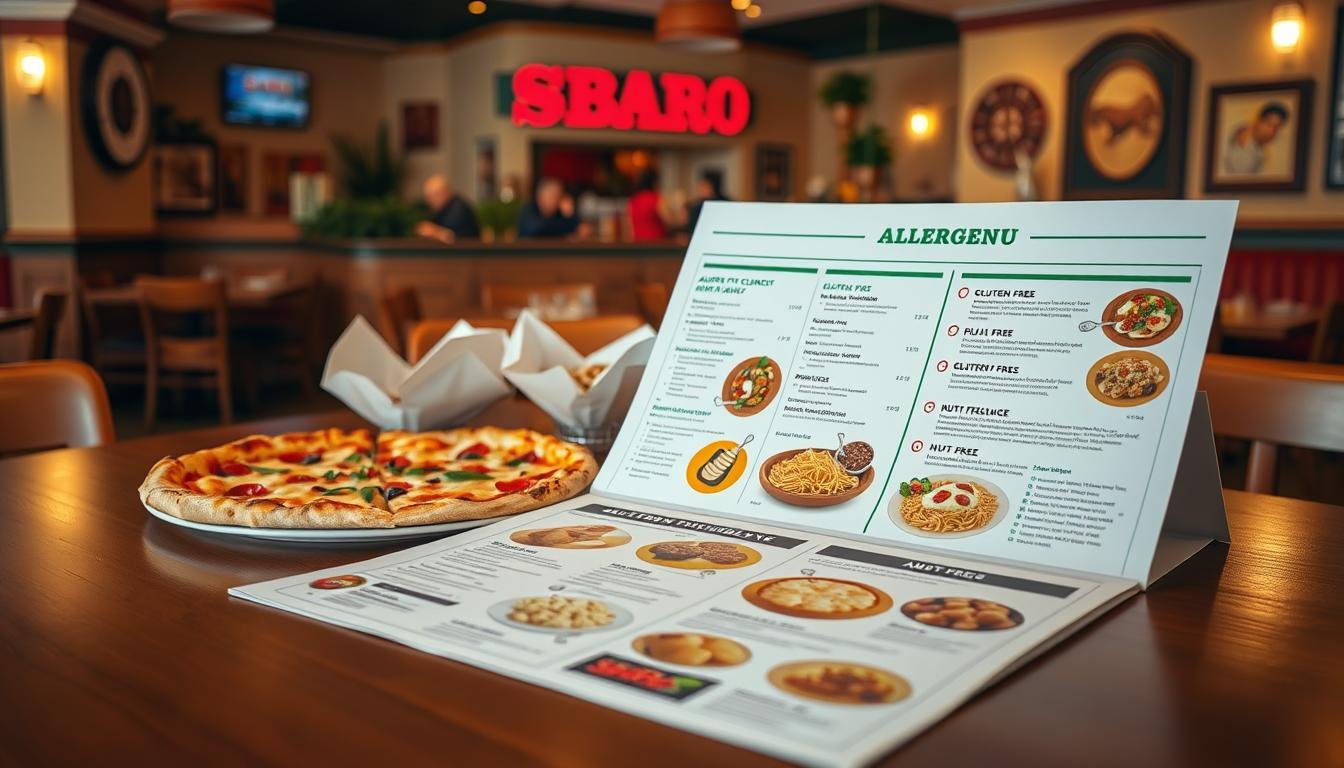
Sbarro Allergen Menu: Your Guide to Allergy-Friendly Options
sbarro allergen menu refers to the chain’s official “Nutritional and Allergens” resources that list ingredients and known triggers. In short: it’s the place to verify which items may contain common risks so you can order more safely.
This guide helps U.S. diners spot allergens, check ingredients, and avoid guessing. It explains how these official documents differ from simple nutrition facts or in-store boards.
Expect updates and location differences. Ingredient lists and allergen statements can change, so the safest step is to review the official resources and call your local restaurant before you order.
What this page delivers: a quick FAQ on where to find official resources, how to read ingredient notes, and the right questions to ask staff. It also promises a clear dietary breakdown mapping common items into a scannable table of Item | Price | Calories | Vegan/Keto/Gluten-Free Options | Allergens.
This guide is aimed at food lovers managing sensitivities, people avoiding dairy or gluten, and caregivers ordering for others. Safety-first: this content helps you make smarter choices but does not replace professional medical advice for severe reactions.
Where to Find Official Sbarro Allergy and Ingredient Information in the United States
Before you order, consult the company’s Nutritional and Allergens page and the Ingredients and Allergy Sheet – USA. These two official resources give the clearest, most reliable information for U.S. locations.
Why use the official pages? They list full ingredient lines, common trigger callouts, and category comparisons. That makes them more trustworthy than third-party lists, which can lag or generalize.
Sbarro Nutritional and Allergens page: what it covers and why it matters
The Nutritional and Allergens page helps you quickly locate allergen references by category. You can compare pizzas, salads, and sides to narrow choices before you arrive. It also highlights common sources like dairy and wheat so you can spot hidden risks faster.
Ingredients and Allergy Sheet – USA: how to use it to verify a specific food item
- Find the exact item name on the Ingredients and Allergy Sheet.
- Cross-check the allergen callouts next to that item.
- Read the ingredient line for hidden sources (for example, dairy derivatives or egg in dressings).
- If you plan custom changes—remove cheese or swap sauces—confirm how that alters ingredients.
Double-check moment: Always ask your local store about preparation and sourcing. The USA sheet is the baseline, but locations may vary.
Quick checklist to save:
- Screenshot the Nutritional and Allergens page.
- Save the Ingredients and Allergy Sheet – USA PDF link.
- Note the item name and ingredient line for fast reference while ordering.
| Document | What it shows | Best use | Action |
|---|---|---|---|
| Nutritional and Allergens page | Category overviews, common triggers | Quick pre-check and category comparison | Screenshot for reference |
| Ingredients and Allergy Sheet – USA | Full ingredient lines for each item | Verify a specific slice, sauce, or salad | Save PDF link and item name |
| Local store confirmation | Preparation notes, local sourcing | Final check for cross-contact or substitutions | Call or ask staff at pickup |
Sbarro allergen menu: How to Use It to Choose Safer Food, Sauce, and Pasta Options
Choose a safe base first, then confirm the sauce and toppings to reduce accidental exposure. This simple order method minimizes reintroduction of hidden triggers.
Common allergens to check first before you order
Before you order, scan for the main risks: wheat/gluten, dairy, and eggs. Also look for soy, tree nuts, and shellfish if they affect you.
How to confirm ingredients in sauces, toppings, and dressings
Confirm the exact sauce or dressing name as listed in official information. Sauces often hide dairy, wheat-based thickeners, or egg in creamy dressings.
Pasta, dough, and base ingredients: what to review before customizing a meal
Crusts, dough, and pasta are commonly wheat-based. If you request no cheese or a vegan option, double-check the base ingredient lines so the change actually removes the risk.
Cross-contact reality in a flour-based kitchen and what “cannot guarantee” means
Because the kitchen uses flour, airborne particles and shared prep surfaces can cause cross-contact. “Cannot guarantee” means items labeled gluten-free may still face trace exposure.
Questions to ask your local eatery to match your dietary restrictions
- Do you use separate utensils or gloves for my request?
- Is this sauce pre-made or prepared in-house?
- Can staff mark the order and clean the surface before prep?
Quick risk ladder: items listed without gluten may still risk cross-contact; for severe reactions, choose packaged or specially prepared alternatives.
| Step | Action | Why it matters |
|---|---|---|
| 1. Base | Choose crust or pasta and read ingredient line | Bases usually contain the biggest allergens |
| 2. Sauce | Confirm sauce name and listed ingredients | Sauces can add hidden dairy or wheat |
| 3. Toppings | Pick safe toppings and request fresh gloves | Prevents cross-contact at assembly |
At the counter, state your allergen, whether it’s a medical allergy or preference, and ask staff to confirm what they can realistically do in that kitchen. The next section reviews gluten-free-leaning and vegan availability today.
Gluten-Free and Vegan Choices: What Sbarro Says Is Available Today
If you seek gluten-free-leaning or plant-based options, here is what the brand lists and what to confirm locally.
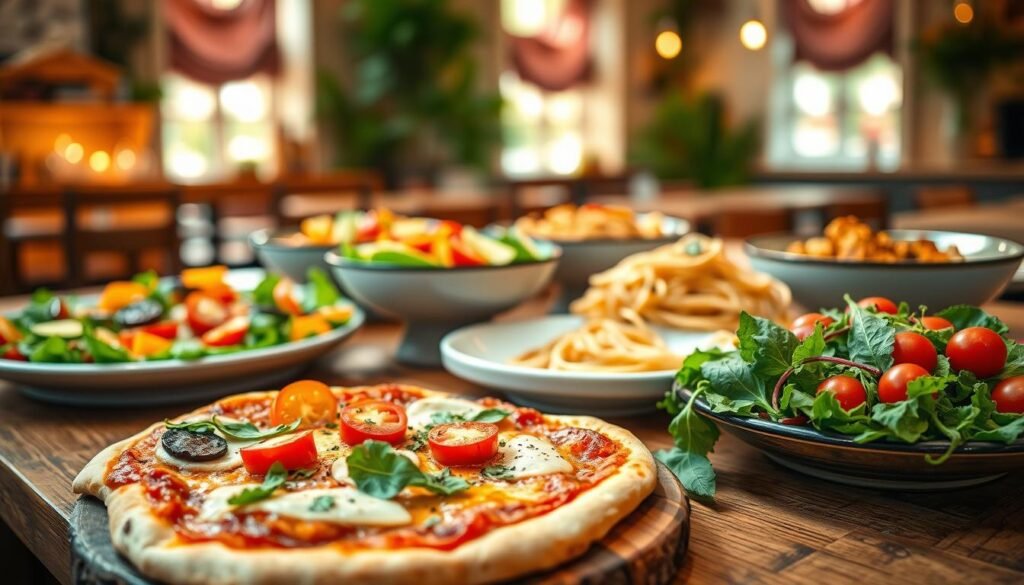
Gluten-free-leaning items and their limits
Items listed as not containing gluten: garden salad, fruit salad, tomato & cucumber salad, roasted potatoes, mixed vegetables, yellow rice.
These choices lack gluten ingredients on paper. However, the kitchen works with flour, so cross-contact can occur. That matters especially for people with celiac disease versus those avoiding gluten by preference.
Vegan options and ordering a cheese-free pizza
Select items such as certain pasta, sauce, dough, and the garden salad are noted as vegan. Still, verify each sauce variety using the Ingredients and Allergy Sheet – USA before you order.
You can request any whole pizza without cheese as a special order. Confirm sauce choice, vegetable toppings, and whether crust add-ons contain dairy or egg.
| Item | Why it may work | What to confirm |
|---|---|---|
| Garden Salad | No gluten-listed ingredients | Dressings and prep method |
| Yellow Rice | Listed gluten-free | Cross-contact in kitchen |
| Pasta/Sauce | Some varieties are vegan | Specific ingredient lines |
Note: Vegan does not mean allergen-free. Plant-based items can still include wheat or nuts. For dietary needs, always check with your local store before ordering.
Conclusion
Start with verified ingredient lists and finish with a local check to protect your meal plan.
Best path: open the official Nutritional and Allergens page, find the exact item on the Ingredients and Allergy Sheet – USA, then ask staff targeted prep questions before you pay.
Key safety takeaway: in a flour-handling kitchen, cross-contact risk is real. Treat “does not contain gluten” as guidance—not a guarantee.
Order-smart checklist: identify your risk, confirm base ingredients, verify sauce and dressings, check toppings, and ask about handling (gloves, clean tools, fresh pans).
Dietary breakdown provided here and as a printable: Item | Price | Calories | Vegan/Keto/Gluten-Free Options | Allergens — note “varies by location” and always reference official documents for current numbers.
Q: Where to find official info? A: Corporate pages and the USA Ingredients sheet.
Q: Are gluten-free options guaranteed? A: No — cross-contact can occur.
Q: Any vegan choices? A: Yes; verify sauce and crust ingredients.
Q: What about cheese rennet? A: Check the ingredient line for animal-derived rennet.
Q: Why confirm locally? A: Preparation and sourcing can differ by store.
Save the official files to your phone and ask staff for help — confident ordering starts with verified ingredients and clear communication.